
📚 Learn Russian Textbook — the Amazon link that pays for this site
As an Amazon Associate, SunnyGoat earns from qualifying purchases.
Sunday, November 22, 2026
Overnight strikes
Russia attacked Ukraine overnight Nov 21–22 with 186 strike drones — Shahed-type drones, 72 of them jet-powered, plus Gerbera and Parodiya decoys — launched from 18:00 on Nov 21 from Oryol, Kursk, Millerovo, Shatalovo and Primorsko-Akhtarsk in Russia, from occupied Donetsk, and from Hvardiiske and Chauda in occupied Crimea, Ukraine's Air Force reported. By 08:00 on Nov 22, air defenses had shot down or suppressed 161 of the 186 drones, including 56 of the 72 jet-powered ones, the Air Force said; hits were recorded at 18 locations and debris from downed drones fell at six more, and the attack was still under way when the report was issued, so the count is preliminary. No missiles were listed in this overnight package.
Ukrainian reporting on where the night's drones landed was still thin at the time of the Air Force report. Open-wire accounts of the night said a residential building was destroyed in Dymar, in Kyiv region, and that explosions in Zaporizhzhia injured three people and disrupted traffic across the DniproHES dam; the Air Force report itself did not name the regions hit, and no fuller regional breakdown had been published in the reporting checked for this brief.
The night before had already brought a separate Russian strike on infrastructure in Kharkiv region: a missile hit the Pechenihy Reservoir Dam on the night of Nov 20–21, striking a section of the T-21-11 Chuhuiv–Velykyi Burluk highway that runs across the dam and suspending traffic over it, the Kharkiv region road service reported, via ISW's Nov 21 assessment. ISW said it was at least the third strike on the dam in the past year and assessed that the strikes aim to degrade the road and river crossing supplying the Vovchansk, Velykyi Burluk and Kupyansk directions. Russia's Defense Ministry did not describe the dam strike in those terms in the reporting checked.
Front line
Ukraine's General Staff reported 131 combat engagements over Nov 21. It said Russia carried out one missile strike and 79 airstrikes, dropping 249 guided aerial bombs, used 7,217 kamikaze drones and conducted 1,951 shelling attacks. The Pokrovsk direction remained the hottest, with 16 Russian attacks near Vilne, Vodianske and toward Kucheriv Yar, Chernihivka, Sviatohorivka, Myrne, Serhiivka, Dobropillia and Novopavlivka; the General Staff also reported 12 attacks on the Kostiantynivka direction, seven on the Huliaipole direction, six on the Lyman direction and two Russian attacks repelled toward Okhrimivka on the South-Slobozhansky direction, and no assaults on the Oleksandrivka or Prydniprovske directions. It said Ukrainian aviation, missile forces and artillery struck two areas where Russian troops and equipment were concentrated, one drone command post and two Russian artillery systems.
In its morning report on Nov 22, the General Staff said Russian forces lost 2,310 personnel over the past day, bringing its estimated total since the full-scale invasion to about 1,637,170, along with 1,392 operational-tactical drones. That is Ukraine's claim. Russia's Defense Ministry, in its own daily account of Nov 21, put Ukrainian losses at up to 1,185 troops, with strikes in 148 areas — the two sides' loss figures for each other do not match, neither side publishes a matching count of its own losses, and both figures are reported here as their makers gave them.
ISW's Nov 21 assessment, working from geolocated footage, said Russian forces recently advanced northeast of Kupyansk — where a Ukrainian military source said Russian troops used fog, wind and rain to push mechanized assaults through Ukrainian defenses — northeast of Lyman, and southeast of Dobropillya. In Sumy region, geolocated footage published Nov 21 showed a Russian serviceman raising a flag in northern Varachyne; Russian sources cited the footage to claim Russian forces control Varachyne, while ISW assessed the footage showed an infiltration mission, not control of the settlement. The claim of control and ISW's reading of the same footage do not agree, and both are reported here as published.
Ukraine strikes back
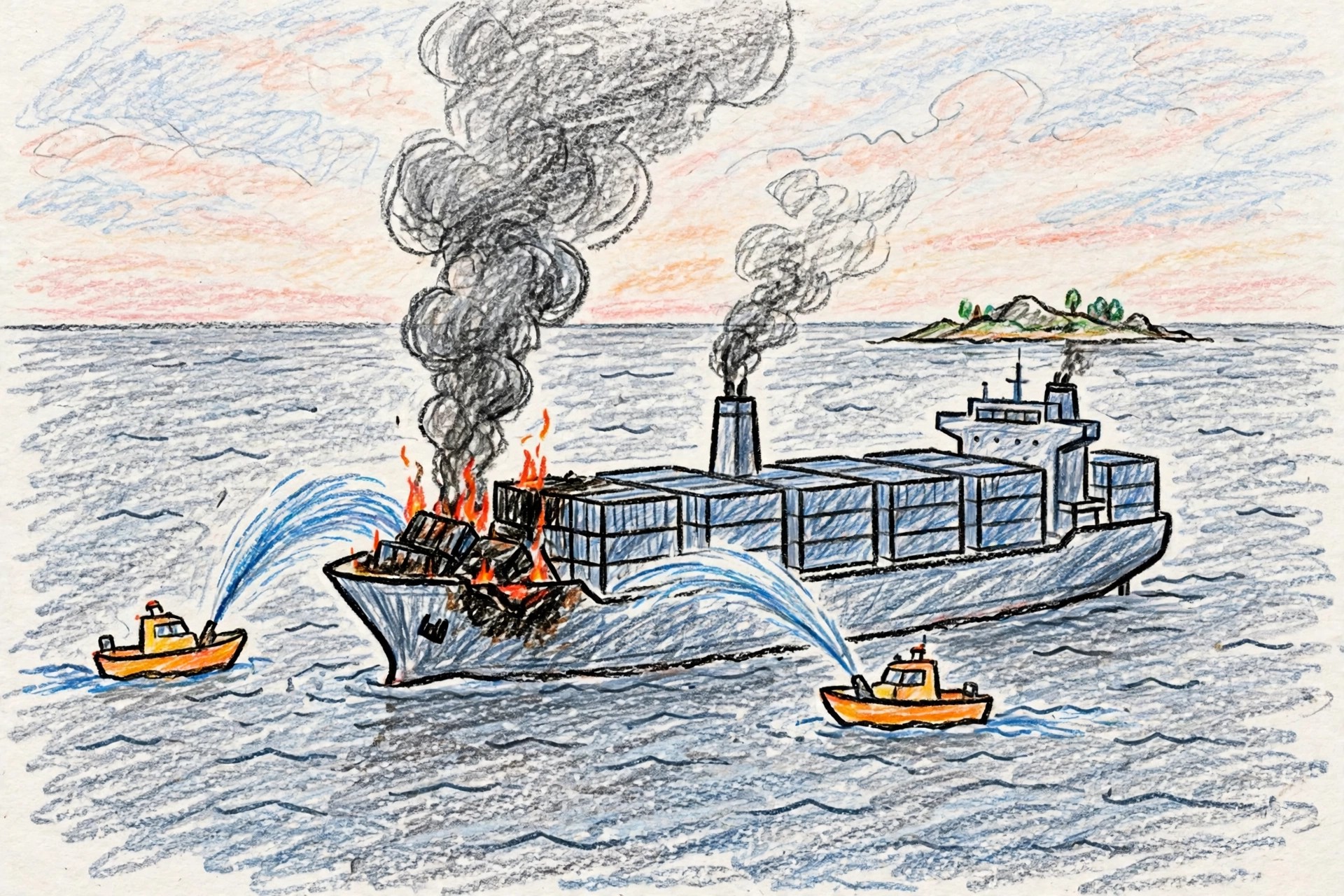
The Russian military cargo ship Sparta II was still burning off Finland on the morning of Nov 22, a day after two drones struck it in the Gulf of Finland, Finland's coast guard said via Reuters. The ship — a 121-metre Russian-flagged cargo vessel owned by Oboronlogistika, the Russian Defense Ministry's logistics company, under US sanctions, which Russian forces used to evacuate military equipment including S-300 air defence systems from Tartus, Syria, in winter 2024–25 — was sailing from St. Petersburg to Kaliningrad when it was hit on Nov 21 west of Russia's Gogland island. It caught fire, lost its way, and drifted north into Finnish territorial waters, where it sits at anchor off Loviisa while Finnish and Estonian vessels spray it with water cannons; all 16 crew were evacuated onto a nearby Russian ship, and no crew casualties were reported. Finnish President Alexander Stubb called the incident serious, and Finland's prime minister Petteri Orpo confirmed the ship had been hit by drones.
Who struck the ship, and exactly where, is described differently by the officials involved. Leningrad region governor Alexander Drozdenko said the vessel was attacked by two drones in neutral waters about three nautical miles from Russia's border, and Kaliningrad governor Alexey Besprozvannykh also reported two drones. Finland's Defence Forces said the strike was likely carried out by Ukraine and that it happened in international waters; a Finnish Border Guard officer put the ship in Russian territorial waters when hit, while Estonia's Police and Border Guard Board said the explosions happened in Estonia's exclusive economic zone. Ukraine itself had not claimed the strike in the reporting checked by Sunday morning. The location accounts — neutral waters, Russian territorial waters, Estonia's economic zone — do not match, and each is reported here as its maker gave it.
Russia's Defense Ministry said its air defences intercepted and destroyed 170 Ukrainian fixed-wing drones overnight Nov 21–22, over Bryansk, Belgorod, Kursk, Voronezh, Tula and Rostov regions, Krasnodar Territory and Crimea, and over the Black Sea, RIA Novosti reported. In its daily account for Nov 21 the ministry put the 24-hour drone tally much higher, at 464 fixed-wing drones shot down. Leningrad governor Alexander Drozdenko separately said 80 drones were shot down over his region on the night of Nov 20–21, the night before the Sparta II strike. The figures cover different windows and come from different Russian officials; Ukraine did not publish matching launch totals, so they stand as the Russian side's claims.
Civilian toll
The toll from the Nov 20 double-tap strike on central Kryvyi Rih rose again on Nov 21. Kryvyi Rih defence council head Oleksandr Vilkul said on Saturday evening that 73 people were now injured, including nine children, Ukrinform reported — up from the 58 carried in yesterday's brief. Twenty-nine of the injured, including six children, are in hospital, nine of them in serious condition, including two children, and the youngest victim is three years old; the injured include three ambulance workers and emergency responders hurt in the follow-up strikes. The death toll stands at two: the seven-year-old boy and the 20-year-old paramedic. Vilkul put the damage at about 26 apartment buildings, a hospital, schools, a restaurant, businesses, garages, ambulances and other vehicles. CNN, citing Vilkul, described the attack as a triple-tap — missiles, then drones at the rescuers, then a third drone strike a short time later — where Ukrainian officials and yesterday's reporting described a double-tap; the sequence is reported here with both descriptions as published. Russia's Defense Ministry has said its Nov 20–21 targets in the area were the Kryvyi Rih thermal power plant and other energy and logistics sites, and does not mention the restaurant area.
Elsewhere in Ukraine, three people were injured by explosions in Zaporizhzhia overnight Nov 21–22, per the open-wire accounts noted above, and Russian shelling across Dnipropetrovsk region on Nov 21 injured five civilians, Ukrainian regional reporting said. In Kharkiv region, the Solonytsivka apartment block struck by a drone on the night of Nov 20–21 — 11 injured, including two children, in the State Emergency Service's account carried in yesterday's reporting — remained the region's largest single civilian incident of the period.
On the Russian side of the border, one person was killed and four civilians injured in Ukrainian attacks on Belgorod region on Nov 21, the regional emergency response centre said via RIA Novosti: a drone exploded in a parking lot in Shebekino, killing a man at the scene and injuring two women and a man, one with a shrapnel wound to the head; 11 cars were damaged and windows broken in two residential buildings and a public building; and a man in a village suffered cuts to his face after a drone damaged his car. Both sides deny deliberately targeting civilians.
Talks
President Volodymyr Zelenskyy proposed on Nov 21 a set of temporary, localised ceasefires to evacuate Ukrainian civilians from 15 settlements along or near the Dnipro River in occupied Kherson and Zaporizhia regions — Radensk, Kostohryzove, Hola Prystan, Stara Zburivka, Nova Zburivka, Hladkivka, Velyki Kopani, Kardashynka and Velyka Kardashynka in Kherson region, and Kamyanske, Verkhnya Krynytsia, Vasylivka, Mayachka, Zlatopil and Dniporudne in Zaporizhia region, ISW reported. Zelenskyy noted that Ukraine and Russia ran a successful humanitarian ceasefire in the Kherson direction in October 2026 to evacuate civilians from occupied Oleshky, and that Ukrainian officials had given the United States a list of further settlements on Nov 14 which the Kremlin had rejected. The Kremlin had not responded to the Nov 21 proposal as of ISW's writing. ISW assessed that such a ceasefire is feasible only along the Dnipro, where the river makes a stable front line, and that the geography of the Donbas front does not support a ceasefire of this kind at this time.
Against that proposal, senior Kremlin officials kept stating war aims that reach far beyond the current front. Foreign Minister Sergei Lavrov, in a documentary for Russian state television's Channel One released in this period, said southeastern Ukraine and most of central Ukraine, including Kyiv itself, are "without a doubt traditionally Russian lands," and that Moscow must achieve its war goals, ISW reported. ISW assessed that statements of that kind are incompatible with the recent US proposals to end the war reported in yesterday's brief — the Article 5-style guarantees and front-line scenarios that Russian Deputy Foreign Minister Sergei Ryabkov rejected on Nov 20 as "unacceptable." No new round of talks, date or venue was announced in the reporting checked for this brief.
Finland's handling of the Sparta II added a further voice calling the war's spillover serious: President Stubb described the Gulf of Finland incident as serious, Estonian Navy commander Ivo Vark said the risk of further attacks in the Gulf of Finland cannot be ruled out, and Finland also reported a suspected Russian helicopter incursion of about 2.5 miles into Finnish airspace off Loviisa on Nov 21. Those are Finnish and Estonian officials' statements; Russia did not comment on the suspected helicopter incursion in the reporting checked for this brief.
Sources: Ukraine's Air Force (via Ukrinform and open wires) and General Staff (via Ukrinform and open wires); Kryvyi Rih defence council head Oleksandr Vilkul (via Ukrinform and CNN); Kharkiv region road service and ISW's Nov 21 assessment; Russia's Defense Ministry (via RIA Novosti and open wires); Leningrad governor Alexander Drozdenko and Kaliningrad governor Alexey Besprozvannykh; Finland's coast guard, Defence Forces and Border Guard and Estonia's Police and Border Guard Board (via Reuters, ISW and open wires); Belgorod region's emergency response centre (via RIA Novosti); and President Volodymyr Zelenskyy's Nov 21 ceasefire proposal and Foreign Minister Sergei Lavrov's Channel One documentary remarks, via ISW. Each side's numbers are that side's claims, labeled as such, and disagreements are flagged where the counts differ.
Back to the briefing page — the newest brief is always there.